Sales · Leadership & Operations · AI
Earning the market share you deserve.
Sure, your sales drivers could be sharper. Every sales team could. But that's not why deals are being lost.
When buyers can't see or feel a meaningful difference between two capable companies, they fall back on the one thing they can compare: price. And business that should be yours goes to whoever is cheaper.
Together, we combine practical sales training, smarter CRM and performance tracking, AI enablement, and stronger leadership and operations to create a difference buyers can see.
Want a read on where the team stands first? Take the diagnostic →
Years accelerating growth for medium and enterprise organizations
Earned client testimonials
Mission: Helping clients earn the market share they deserve
Good is the enemy of great.
You’re good. Nothing’s wrong. Your team reads the room, runs a strong meeting, and knows what it’s selling. The skill is real.
The problem is that buyers may perceive every capable vendor as equally good.
When everyone looks good, being good is no longer enough. Buyers must clearly see how your experience and values differ from the competition. If they cannot, they default to price.
The leader’s margin
Nobody overtook them. Nothing they did changed.
We found this in a market share study twenty-seven years ago.
A market leader watched a twenty-point lead shrink to nineteen, then seventeen, without anyone passing them.
The global manufacturer had raised the standard and tied financial incentives to meeting it. The market leader was already there, so they changed nothing. But every competing retailer and broker had a clear reason to improve, and they did.
The leader hadn't gotten worse. The industry had gotten better. And from the outside, the leader no longer looked as far ahead.
Most teams assume the difference is obvious because their intent is real. But buyers cannot see what you intend, only what you make clear. Differentiation is what gets remembered and chosen.
A few of the people who were in the room


“Since 2021, MBA has grown total sales volume by nearly 10×, grown average job size by more than 5×, and improved its win rate from fewer than 4 out of 10 bids to nearly 6 out of 10.”

“We successfully increased the product premium—in the context of a down market—by 5¢/lb without creating friction.”


“He provides great insights and tools, is patient and considerate, and delivers high quality work. He was instrumental in delivering the outcome.”


“The lessons were tremendous, and Michael’s delivery helped us quickly internalize the sales science and implement it into our communication patterns with ease.”


“If you want a fresh perspective from someone who has managed teams and carried a bag, I highly recommend Michael Crain. His authentic, realistic approach was refreshing.”


“His passion, energy and experience are incredible. I highly recommend Michael to any sales organization that is looking to be trained in this area.”


“It provides you the framework to plug in your individual tribal knowledge and brand yourself as an expert in your field. He will elevate you to new levels.”


“Fresh, actionable insights, far removed from the usual recycled sales training courses. Michael challenged us to rethink traditional approaches.”


“The training received in his class is by far one of the best training sessions I have ever been to. The content was very applicable to my career and his teaching style was impeccable.”
Accelerating your ability to earn the market share you deserve.
Everything we do is one of three things.
Defining differentiation
Together, we pressure test and sharpen your differentiation, so it stands up to scrutiny and gives buyers a compelling reason to choose you.
Demonstrating uniqueness
Once we've sharpened your differentiation, we make it show up where it counts: in the pitch, the proposal, and the room, so buyers feel your value in ways the competition cannot match.
Delivering customer confidence
As a team, we reinforce your ability to deliver on the promise, giving customers the confidence to choose you and keep choosing you. Think of it as ensuring the sale after the sale.
A really good place to start.
Seven questions to ask your own team. They are simple to read and harder to answer, the kind of questions that make you go hmm. Good teams pause on them, because they point at things that are easy to stop noticing. Nothing to fill in, nothing to send us, and no call required.
What usually brings a team to us.
The teams we work with are usually already good. Some know it. Others see the results have stopped improving and know something isn’t working. Both are often right. The team is good, but something around them needs to change.
When you come in second, you pay the most to lose.
A strong team wins the meeting and then discounts to close it.
The pipeline looks full, but the stages keep getting pushed.
Sales changed how they sell, and the rest of the company never got the memo.
The AI tools got bought before anyone agreed what the work actually is.
We work with teams navigating medium-to-complex sales cycles in competitive markets to close performance gaps, strengthen customer confidence, grow market share, and achieve revenue targets.
We are not the right fit for one-and-done B2C sales, organizations checking the training box, or teams convinced they have little room to improve.
Where a team starts depends on where it is.
Three ways to work together, each running on the same three shifts above. Most companies start with the first and work outward.
.webp)
Sales
We work out what actually makes you the right call, the reason that survives a buyer pushing on it, then build it into how your sales drivers sell. After that we come back and run it on the deals they are working right now.
.webp)
Leadership & Operations
A sale is a promise. This is the part of the company that decides whether the promise turns out to be true. Same method, pointed at the people who deliver what sales sold.
.webp)
AI Acceleration
Used wisely, AI accelerates outcomes, simplifies processes, and strengthens performance. Led by Chris Resch, who first hired us to train his sales team before partnering with us, we embed AI capabilities intelligently into the tools your team uses every day, helping you stay ahead of how competitors are putting AI to work.
A finish line, not an open lane.
Most training engagements begin with one or two days of live working sessions and continue through short workouts on real deals and business challenges.
We agree on the finish line before the work starts. You know what we are working toward, and you know when we get there. This is not an open-ended engagement that quietly rolls on month after month. When we reach the line, the work is done, and anything after that is your call.
We tell you on the first call if a team is not ready for the next piece.
Practical work, from people who have done it.
The work is practical, and the people who run it have carried a number, led the team, and had the hard conversation. We start with what makes you hard to compare, rather than the skills every competitor is already drilling.
The questions that come up first.
How are you different from the big-name training firms?
Too often they sell curriculum. As a fellow seller, we have learned a curriculum makes a team better at the things every competitor is already doing, which is how an entire market ends up equally capable and equally interchangeable. We work on what makes a team hard to compare in the first place. Those are different problems, and only one of them changes what a buyer decides.
How long is an engagement?
Typically one to two days of live training, on site or virtual, then short workouts that keep it from wearing off. After that it is your call: coaching for the managers, the rest of the company, or building the standard into the tools. We say so on the first call if a team is not ready for the next piece.
Does this work in my industry?
Industries across the globe, in every kind of vertical, come to work with us, and the variety is part of why the method holds. What matters is that the sale is medium or complex rather than simple. Commoditization does not care what you sell. It happens anywhere a buyer cannot tell two capable vendors apart.
What does the first call cost?
Nothing. No pitch deck, and you will leave with at least one thing you can use whether or not we ever work together.
Why the racing theme?
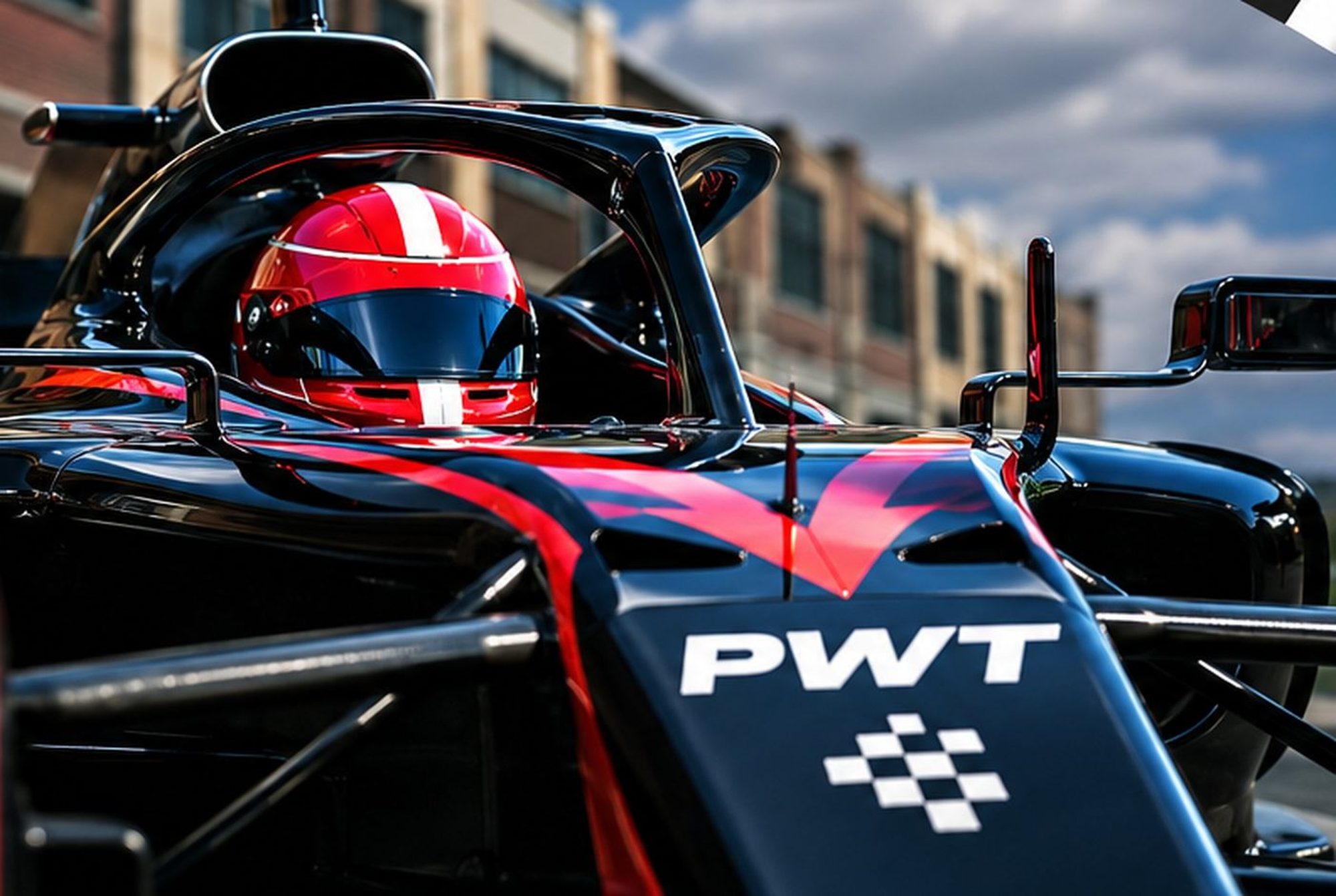
We use a racing theme because it's fun and the parallels are powerful. The driver leads, but it takes an aligned team to win and deliver on the promise. Sales is no different, with one important distinction: we don't get paid for second place.
Book a call.
The first call with Predictive Wins is free and runs twenty-five minutes. A conversation about where the team is now, and where it could be even better.
We don’t get paid for second place. Neither do you.